Monday, December 29, 2014

Slipping on test

As winter has arrived for a short while in Sweden a discussion got me thinking.
A friends mother has apparently decided that it will be slippery everywhere, as there is about 1 mm of snow on the ground and therefore is a bit scared to actually go out.
Do we experience similar behavior when testing ?
Do we test in different ways depending on the state of the software?

If the software is in a bad state, or early in development, where issues are common:
You are expecting issues and therefore test in a different way, as: “it will not work anyway”, and you catch the small issues and might miss the big one. Or even worse give up before even trying one scenario.
I.e one is expecting to slip on the ice and therefore stiffens up and walks completely different and is probably more likely to actually slip on each little patch of ice
Or do you “walk” normally but is aware of the ice and prepared that the foot might skid a bit. ie you test as you normally do and if you “slip” are prepared for it and can handle that issue and continue to the really important ones

Monday, December 8, 2014

Keeping the focus

After doing some interviews for possible new assignment, the approaches have been quite different. They have ranged from the “traditional” question - answer to one that felt more like I held a presentation. And given the interaction with the interviewer my own performance have been quite different.

Is there a similar interaction when you test ?
Regardless if you are running test cases or using an ET approach, the way the system under test responds might dictate they way you continue to interact with the system.
for example if the test scenario takes a long time, ie running large sql queries, one might lose focus during the waiting time and might miss issues once the system actually responds. On the contrary if the system responds quickly you can keep focus better and more likely to spot the possible issues.
For me the more challenging the interview is and if there is a good interaction with the interviewer I seem to perform better. Its a similar feeling when running tests. Early in the project the system is new and its challenging to test. One must get “to know” the system/function and issues are often common. You get continuous feedback and expand you knowledge.
But the longer the testing runs you start to know the system and issues have been handled so the interaction and response might not be that immediate. which in turns might mean the focus is dropping of and issues can be missed

How do you keep focus if the interaction and response from the system drops, or when the test phase is long ?

Wednesday, November 26, 2014

Handing over the project to maintenance

Finally the project is nearing the end and handovers are being planned, kick-out dinner is booked and the next project is being staffed up. But there are still some open defects, how can this be?
Shouldn't we deliver a complete software, there should not be any defects, or ?
As stated over and over testing can continue until the fingers bleed, and yet there will be new issues found or some issues might not have been solved. So how do you handle this ?
A good handover is the key, and as usual good communication. The receiving organization must be aware of the current status and if they can accept a delivery with open issues. Also there should be a plan for handling these open issues.
Usually some tool is used for tracking issues during development, QC, Jira or similar. But when it's handed over to maintenance, they might not use the same tool, or the issue handling process is completely different as the product is now in production.
Make sure the open defects are clearly described with steps to recreate.
Ensure that when handover is done that the receiving organization understands the issue and the possible impacts. Also make sure that they understand the issue, what seems obvious to you might not be for another person.
Good practice is also to do a follow up later to see how these issues have been handled. As it is easy to forget and if not fixed they will come back in one way or the other.

Wednesday, November 19, 2014

Emergency room

After spending an afternoon and evening in the hands of healthcare due to bike crash and resulting fracture in the arm, i started thinking on how this is similar to development and test.

The scenario.
I am biking home from work and colliding with a pedestrian resulting i a short flight and a stiff and throbbing arm.

Defect report was raised to “first line support” and providing scenario and symptoms. The initial investigation showed that it most likely was nothing serious and rest was prescribed.
So a minor defect and nothing that needed to be re-written or was a show stopper.

A few days later the arm still was not better so a new call to First-line was made and as the symptoms had changed slightly it was decided that a doctor should look at it.
The minor defect now re-appeared, and was re-opened, but in a slightly different way and a little different outcome.

Finally arrived at the doctors office and was meet by the nurses who made an initial investigation and decided that x-ray was needed. This was done and the images show to the doctor.
Investigating the defect to find the seriousness of it.

Quick meeting with the doctor confirms the fracture and a cast is needed
Product owner checks the defect and decides it needs to be fixed.

Once again meeting the nurses and getting a cast. Information on what to think about and how to handle the cast.
Defect fix information and a workaround provided by the developers. Final fix to be delivered in one to two weeks.

Conclusion
It is important to verify the defect, can it be recreated, and if so will it affect more than one area. A minor defect in one system might affect another part and then become a major.

So remember to test around the defect, as they tend to live in groups

Thursday, November 13, 2014

Stop29119 - A Tempest in a Teapot ?

It has been a few months now since CAST 2014 which seems to have been the starting point for the “great ISO29119 debate”. But what has actually happened since then ?

  • The Stop29119 petition was started and got over 1000 signatures and this was then presented to the ISO-group.
  • Numerous blog posts have been written
    • Mostly posts against the standard, but a few pro-ISO have appeared
  • Debate on Twitter and other media
    • Ranging from personal beef to factual discussions
  • Local discussions appears to have happened
  • Probably quite a few people have bought the standard (me included)
  • No information if any company has actually started to implement this

But what now ?

  • The debate seems to have abated and things have gone a bit silent.
  • No response to the petition, at least to my knowledge
  • We are still waiting for the two final chapters of the standard.
  • Awaiting to see if any organization will pick this up or not

So was the whole debate a storm in a water glass?

Well in a way it was. Probably because only a small number of people did the open discussions.
In another way it was not. It brought the attention to the general community on what is going on and even if most stayed silent, many local discussions seem to have happened. And the information has been spreading.
Some discussions might have gotten a bit out of hand and might have lost focus, but thats normal when you really stand for something. Then again we are testers and discussing is what we do, and question how things are.

Looking forward to read the last chapters and also to see what will happen both within the community as well as within organizations in regards to the standard

Monday, November 10, 2014

Hiking Analogy

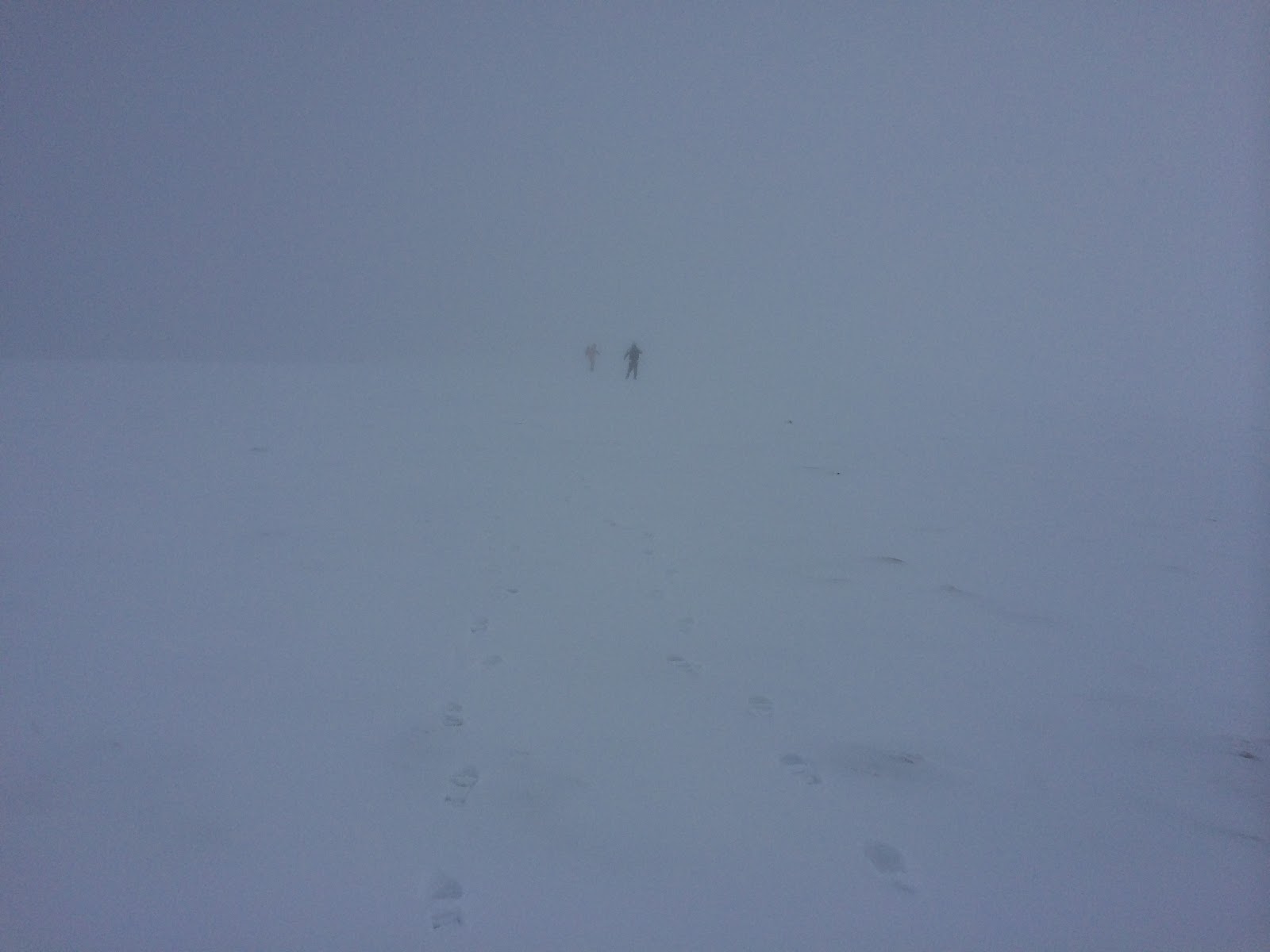
After doing a hike up a mountain in near white-out conditions it got me thinking that this is a good analogy for approaching a new system-under-test.

IMG_3929.JPG

You know what it is supposed to look like, what the system should do.
Up ahead is the goal, the end product.
Right now you can only see 100 meters ahead, you see the current function.
You will encounter cliff face - defects or issues

IMG_3931.JPG

Once at the top you’ll see the big picture can say you have a good view of the system
In order to really know the trail/system you need to do the hike several times in different conditions, it might be hard going but once done it is a rewarding feeling


IMG_3932.JPG

Friday, October 31, 2014

Titles and definitions

In an earlier post i talked a little about my thoughts on test manager and test team lead.
There is a underlying discussion here that I would like bring up.
Why is it that the career path for testers is usually to move on to become TM or similar?
And how come a TM or TTL usually gets better pay?

As I stated in the last post: to me a TM or TTL is a tester with some additional responsibilities and tasks. This usually mean that less time is left to actual testing, ie the value to the company/organisation might be less than for the regular testers within the team.
To me the most valuable person is the tester and the TTL is there to enable them to do their job.
So why is it that TM seems to be the way forward rather than becoming THE expert tester ?
Development have had a similar issue a few years ago when the path was: developer to dev team lead to project manager. Not sure if this still applies today. One can become a brilliant developer and get the recognition for it.
So why is it not the same in test?

Test as a profession might be a bit younger and has really come into its own in the last couple of years, while dev has a few decades to do the same.
It also might have something to do with the title, put manager there and the paygrade jumps.
But as said above a great tester will provide more value to the organization.
Maybe there is a need to better define Tester in order to better see the difference between A tester and THE tester.